Size, Furniture, Lighting & More
An area rug is more than just a floor covering — it’s a design anchor that pulls your space together. Whether you’re refreshing a living room, bedroom, or dining area, the right rug can add warmth, define zones, and elevate your overall aesthetic. But how do you choose the right one?
We pulled together a comprehensive guide to selecting the perfect area rug, factoring in size, furniture placement, lighting, and overall room design.
1. Start with Size: Bigger is Usually Better
One of the most common rug mistakes? Going too small. A rug that’s too tiny can make a room feel disjointed, while the right size creates cohesion.
General Rug Size Guidelines:
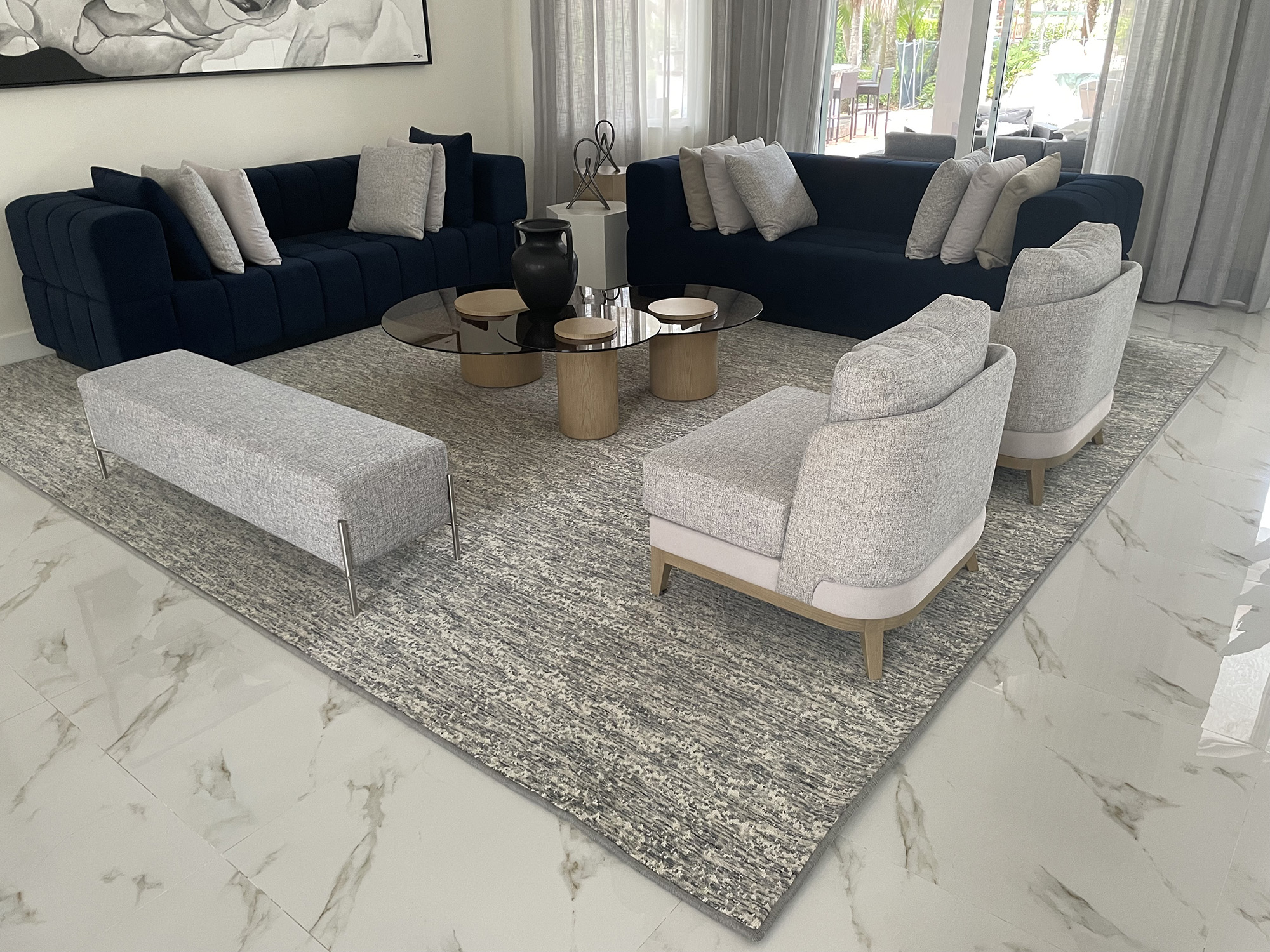
- Living Room: At least the front legs of all furniture should sit on the rug. For larger spaces, consider a rug large enough to fit all furniture legs.
- Dining Room: The rug should extend 24–30 inches beyond the edge of the table on all sides, so chairs remain on the rug even when pulled out.
- Bedroom: Ideally, place the rug under the bed with 2–3 feet extending beyond the sides and foot. Or, use runners on either side for smaller rooms.
Pro Tip: Always measure your space and use painter’s tape to mock out the rug dimensions before buying.
2. Match Your Furniture Layout
Your rug should complement your furniture arrangement — not fight it.
For Different Layouts:
- Open Floor Plan: Use a rug to define and separate zones, like a seating area or dining space.
- Centered Layouts: Place the rug so it’s centered under your main furniture pieces (like the sofa and coffee table).
- Floating Furniture: If your furniture doesn't sit against walls, make sure the rug is large enough to contain the entire layout.
Think of the rug as the “frame” for your furniture grouping. Everything should feel like it belongs within its boundaries.
3. Consider Lighting and Room Brightness
Lighting plays a big role in how your rug looks and feels in the space.
- Bright, Sunlit Rooms: Darker rugs can ground the space and add contrast.
- Low-Light or North-Facing Rooms: Choose lighter-colored rugs to reflect light and keep the room feeling open.
- Artificial Lighting: Rugs with a bit of texture or sheen (like wool-silk blends or viscose) can catch the light beautifully in the evening.
Also, be mindful of fading. If your room gets direct sunlight, natural fiber or synthetic blends tend to hold color better over time.
4. Style and Color: Complement, Don’t Compete
Your rug should work with your existing décor, not overpower it.
- Neutral Rooms: Add visual interest with a bold pattern or color.
- Busy Rooms: Stick with simpler, solid rugs or subtle patterns to avoid visual chaos.
- Layering Textures: Try layering a flatweave rug over a larger jute rug for a warm, designer look.
And don’t forget maintenance — lighter rugs may show stains more easily, while patterned or darker rugs tend to hide wear and tear better.
5. Material Matters
Different materials offer different benefits based on your needs:
- Wool: Durable, soft, and naturally stain-resistant — great for high-traffic areas.
- Cotton: Lightweight and affordable, but best for low-traffic spaces.
Synthetic (like polypropylene): Stain-resistant and budget-friendly — ideal for families or pet owners. - Natural fibers (jute, sisal): Earthy texture and eco-friendly, but can be rough underfoot and harder to clean.
Choosing the right area rug is a mix of art and function. Take time to measure, consider your lighting, and think about how the rug will interact with your furniture and room layout. When all the elements align, a rug does more than fill space — it transforms it.
Need help visualizing the perfect rug for your space? Check out our online visualizer where you can upload a photo of your room to “try on” different styles